
Written By Janne Lee
Understanding Mordants: in Botanical Printing
Botanical printing, also known as eco-printing, is a fascinating way to transfer the natural beauty of leaves and plants onto fabric. One of the most important steps in this process is mordanting, which involves treating the fabric with a substance that helps bind plant pigments to the fibers, creating long-lasting and vibrant prints. Two common mordants used in botanical printing are ferrous sulfate and aluminum sulfate.
This blog post will explore the roles these metals play in the printing process, why they are essential, and how they influence the final results of your prints.
What is Mordanting?
Mordanting is the process of applying a metallic salt to fabric to enhance the bond between plant pigments and fibers. Without mordants, many natural colors can fade quickly or wash out entirely. Mordants not only help the pigments adhere to the fabric but also influence the tone and intensity of the colors, making them an integral part of the botanical printing process.
Why Use Ferrous Sulfate in Botanical Printing?
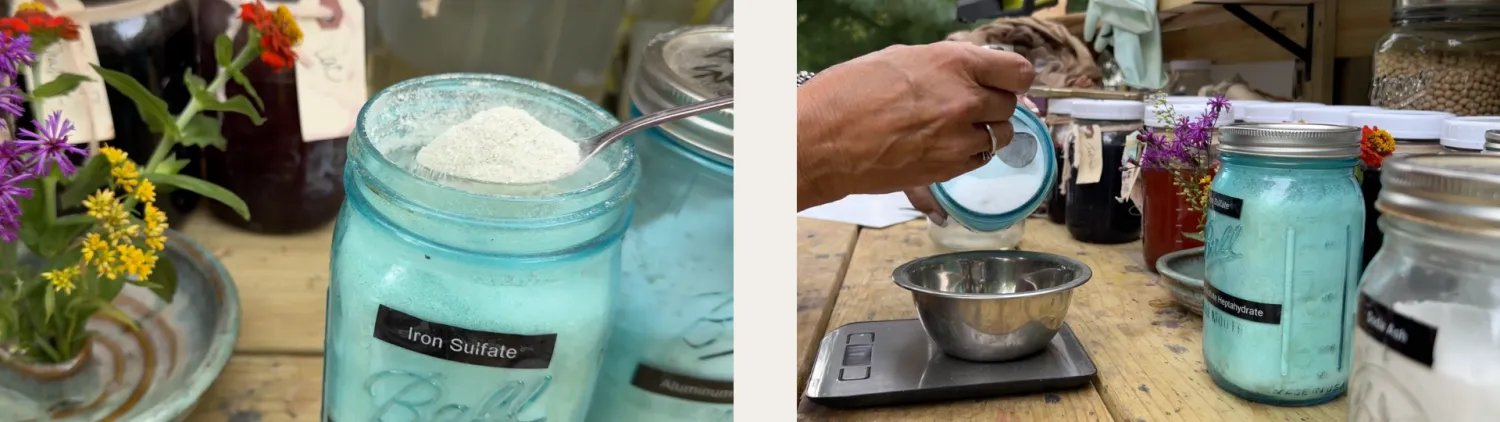
Ferrous sulfate, also known as iron sulfate, is a versatile mordant that has a transformative effect on botanical prints.
1. Deepening and Muting Colors
Iron acts as a color modifier, often darkening or muting natural colors. For example, yellow pigments might shift to olive greens, while reds and oranges can turn to browns or grays. This makes ferrous sulfate an excellent choice for achieving earthy, subdued tones.
2. Enhancing Leaf Prints
Iron enhances the clarity of leaf prints, creating strong outlines and detailed impressions. This is especially useful when working with plants that have high tannin content, as iron reacts with tannins to produce deep, rich colors.
3. Creating Contrast
When used alongside other mordants like aluminum sulfate, ferrous sulfate can create striking contrasts. Some areas of the fabric may remain bright, while others darken, adding depth and complexity to your prints.
Why Use Aluminum Sulfate in Botanical Printing?
Aluminum sulfate is another widely used mordant that has distinct properties and benefits for botanical printing.
1. Brightening Colors
Aluminum sulfate helps preserve the brightness and vibrancy of natural pigments. For example, it can enhance yellow tones from marigolds, reds from madder, and greens from certain leaves.
2. Subtle and Even Prints
Unlike ferrous sulfate, which can create dramatic effects, aluminum sulfate tends to produce more subtle, evenly distributed prints. It’s ideal for achieving soft, harmonious designs.
3. Compatibility with Delicate Fabrics
Aluminum sulfate is gentle on fibers like silk and wool, making it a popular choice for working with delicate or fine fabrics.
Choosing the Right Mordant for Your Project
The choice between ferrous sulfate and aluminum sulfate—or using both—depends on the desired outcome of your botanical printing project.
For Bold, High-Contrast Prints: Use ferrous sulfate to deepen colors and highlight leaf details.
For Bright, Vibrant Colors: Use aluminum sulfate to enhance the natural brilliance of pigments.
For Layered Effects: Combine both mordants in different areas of the fabric to create dynamic contrasts between bright and muted tones.
The Science Behind Mordants in Botanical Printing
The effectiveness of ferrous sulfate and aluminum sulfate comes down to chemistry.
Ferrous Sulfate: Reacts strongly with tannins in leaves, forming iron-tannin complexes that produce darker tones.
Aluminum Sulfate: Binds with plant pigments more gently, preserving their original hues while enhancing adhesion to fibers.
This interplay of chemical reactions allows botanical printers to unlock a wide range of colors and effects using the same plants.
Working Safely with Metal Mordants
While ferrous sulfate and aluminum sulfate are invaluable in botanical printing, they should be handled with care:
Always wear gloves and a mask when working with mordants to avoid skin contact or inhalation.
Work in a well-ventilated area.
Dispose of mordant solutions responsibly, following local environmental guidelines.
Final Thoughts
Ferrous sulfate and aluminum sulfate are powerful tools for botanical printing, allowing artists to achieve stunning, long-lasting designs. Whether you’re drawn to the bold, dramatic effects of iron or the bright, delicate hues preserved by aluminum, mordants open up endless possibilities for creative expression.
By understanding the roles these metals play, you can better plan your projects and explore the beautiful interplay between plants, fabric, and mordants.
Are you experimenting with botanical printing? Share your experiences and favorite plants for printing in the comments below!
Happy printing! 🌿
Understanding Mordants: in Botanical Printing
Janne Lee
Fine Artist
Copyright © 2022 Janné Lee llc
To intertwine the beauty of nature with artistic expression, forging a path where botanical artistry meets innovation. Through
exploration, creation, and the fusion of natural elements, my mission is to inspire a profound connection between art and the
environment. My commitment lies in celebrating the harmony between artistic vision and the natural world where artistry and
nature converge.